English
 中文
中文 日本語
日本語 한국어
한국어 français
 Deutsch
 Español
 italiano
 русский
 português
 العربية
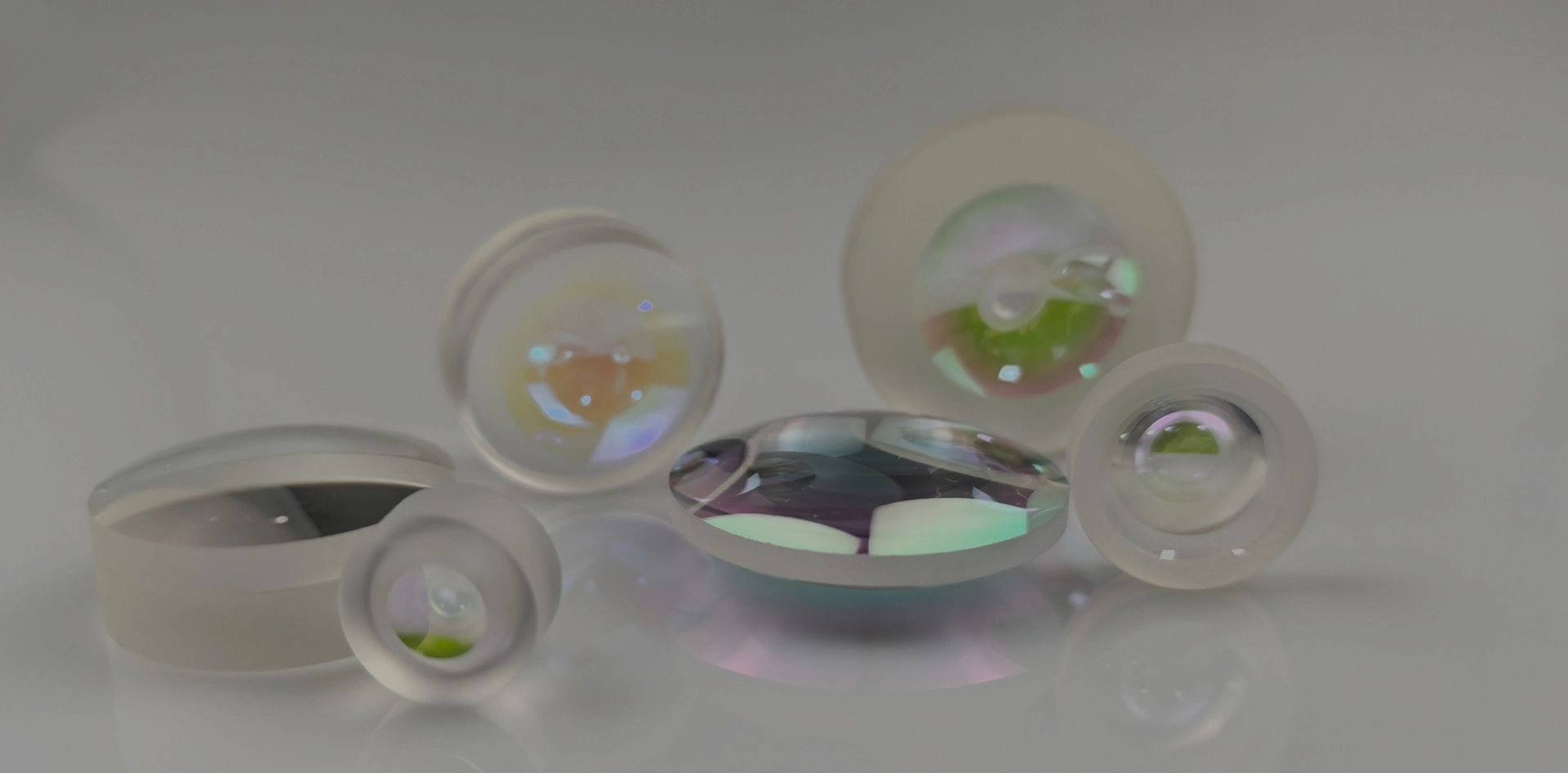
Selecting an optical material requires balancing optical performance, environmental stability, manufacturability and cost. The following properties should be reviewed together rather than independently.
The material must transmit the complete operating wavelength range at the required component thickness. Internal absorption, impurities, surface reflection and coatings all affect final system transmission.
Refractive index determines how strongly a material bends light. A higher-index material may achieve the required optical power with less curvature, but it can also increase surface reflection and coating requirements.
Dispersion describes how refractive index changes with wavelength. It affects chromatic aberration in lenses and spectral separation in prisms. Broadband imaging systems must evaluate dispersion across the complete operating band.
Thermal expansion, thermal conductivity and the temperature coefficient of refractive index influence focus stability, wavefront performance and mounting design as temperature changes.
Material hardness, crystal orientation, available blank size, achievable surface quality and coating adhesion affect component cost, lead time and production risk.
If you would like to build your own precision optical products or request a quote, please click one of the two buttons below. Otherwise, please fill out the form below with any questions or concerns.
Address
B3 Shengshi Shengshi Industrial Park,Auto-ETDZ, Changchun, Jilin, China
Call Us