English
 中文
中文 日本語
日本語 한국어
한국어 français
 Deutsch
 Español
 italiano
 русский
 português
 العربية

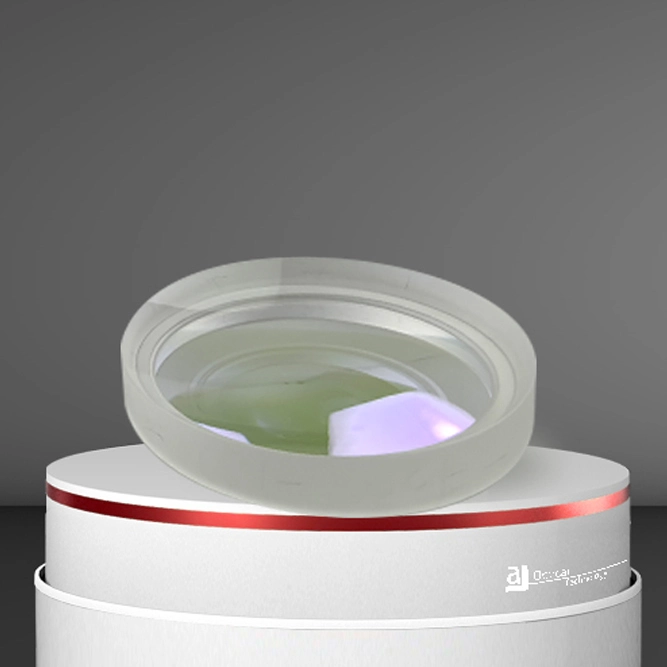
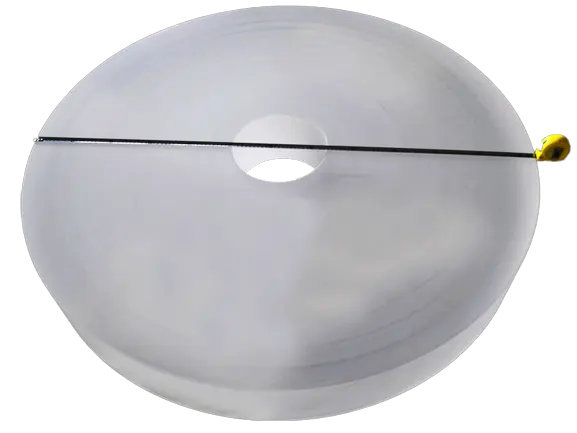
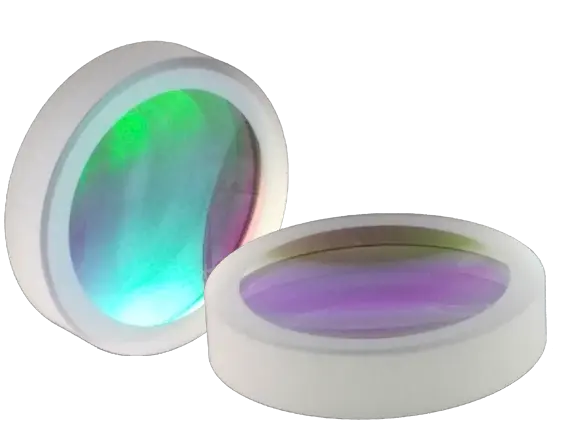
Double Plano Convex Lens—also known as a bi-convex lens—is characterised by having two outwardly curved surfaces that are convex toward the outside. This symmetric shape causes parallel rays of light entering the lens to bend inward and converge toward a focal point. Because both surfaces contribute to focusing, the lens exhibits a positive focal length and acts as a converging optical component. The curvature radii, refractive index of the lens material, and lens geometry together govern how tightly the light converges and how much aberration is introduced. In optical systems, designers choose a Double Plano Convex Lens when the object and image distances are relatively symmetric, because the symmetry helps balance spherical aberration and reduce distortion. According to optical references, Double Plano Convex Lenses are often employed in image relay setups and in imaging applications at low magnification, where they offer good performance for moderate field angles.
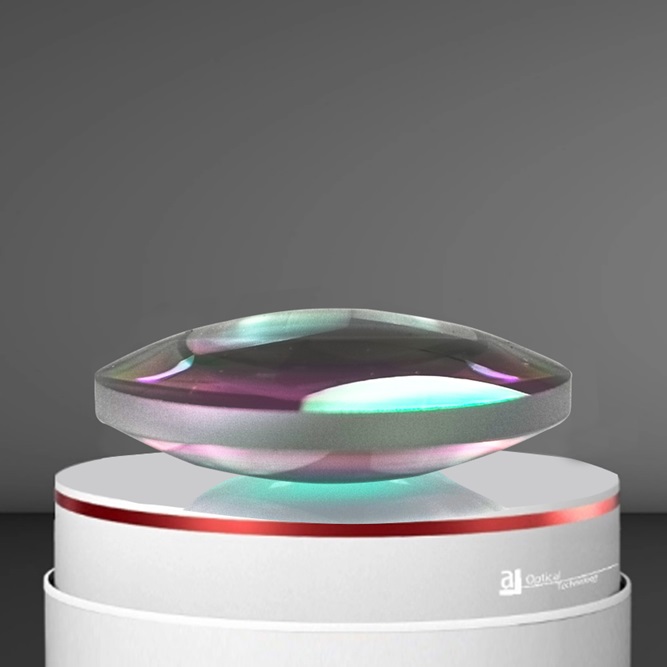
Double Plano Convex Lenses have several favourable characteristics: their symmetric design helps reduce off-axis aberrations when the object and image distances are similar; they offer good focusing ability for general imaging tasks; and their shape makes manufacturing more straightforward than aspheric surfaces. However, because a spherical Double Plano Convex Lens inherently retains spherical aberration, its performance degrades at high aperture or large field angles unless corrected. Chromatic aberration is another inherent limitation, particularly for broadband imaging, unless special glass or achromatic combinations are used. The choice of substrate—such as optical glass like BK7, fused silica, or special low dispersion materials—and the application of anti-reflection coatings significantly influence performance in different spectral ranges.
One might ask: in which optical applications does a Double Plano Convex Lens truly shine? The answer is: in a multitude of imaging and focusing roles. From simple camera systems and projectors to scientific instruments, lab optics, laser beam shaping, and illumination systems, Double Plano Convex Lenses are ubiquitous. They are particularly effective when the object and image distances are close to one another, such as in microscopy, collimation, or beam focusing. In laser systems, a Double Plano Convex Lens can focus a beam to a spot for measurement or material processing. In microscopy, it may serve as an objective or auxiliary lens in low magnification setups. Its versatility also suits use in alignment systems, optical sensors, and general-purpose imaging setups where moderate aberration tolerance is acceptable.
Selecting the right Plano Convex Lens (which is often used interchangeably with double-convex in general vernacular, though plano-convex technically has one flat side) requires balancing focal length, lens diameter, substrate material, surface quality, coating, and mounting considerations. The focal length determines where the lens focuses light; a shorter focal length gives stronger convergence and higher magnification, while a longer focal length yields a gentler focus and wider working distance. The diameter and lens aperture affect how much light can pass and influence aberration control. Substrate materials like BK7, fused silica, or UV-grade glass are chosen based on spectral requirements and environmental conditions. Surface figure accuracy and polishing quality directly influence image sharpness and contrast. Anti-reflection coatings matched to the working wavelength reduce surface reflections and ghosting. Mechanical tolerances, centring, and alignment must also be considered to ensure the lens performs as intended. Atoptical's catalogue of double convex lenses offers refined control over these parameters, making it possible to tailor each lens for specific optical systems.
To maximize performance, integrate a Double Plano Convex Lens with care. Mounts must be designed to avoid tilt, decenter, or stress that would distort surfaces. Thermal expansion or vibration can shift the optical axis, so stable mechanical support and thermal compensation are important. In multi-element systems, spacing and alignment between lens elements must follow optical design tolerances to avoid introducing new aberrations. Cleanliness is also critical: contamination or fingerprints degrade image quality. Coated lenses require protection from abrasive cleaners. In practice, prototyping with the selected lens, measuring wavefront error and spot diagrams, and adjusting alignment iteratively help validate that the lens meets system requirements. Atoptical's lenses are compatible with standard mounts and provide documentation to assist integrators in achieving optimal performance.
This is the last one.