English
 中文
中文 日本語
日本語 한국어
한국어 français
 Deutsch
 Español
 italiano
 русский
 português
 العربية
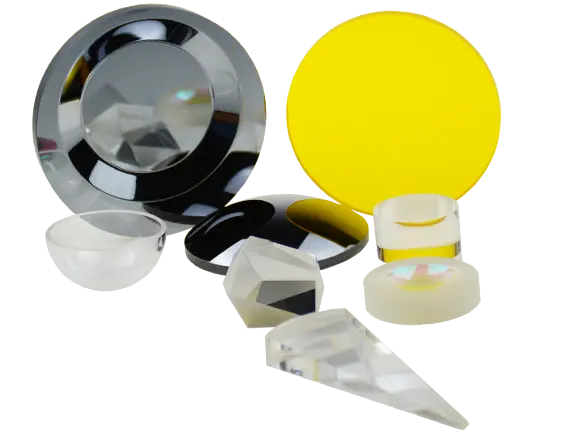
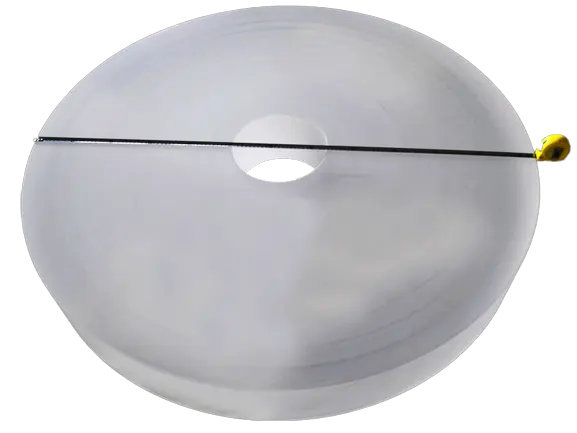
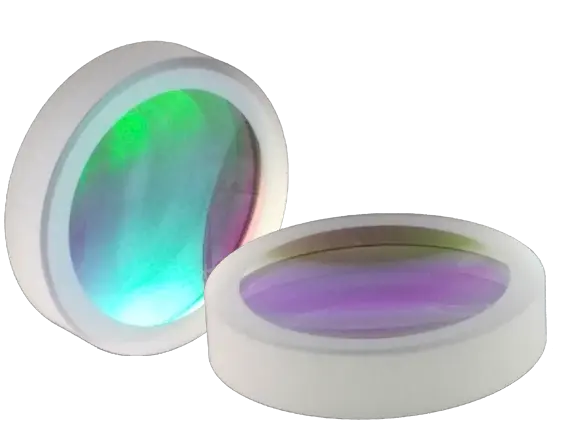
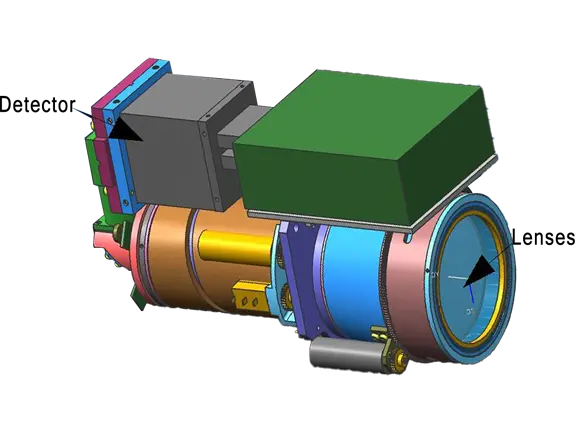

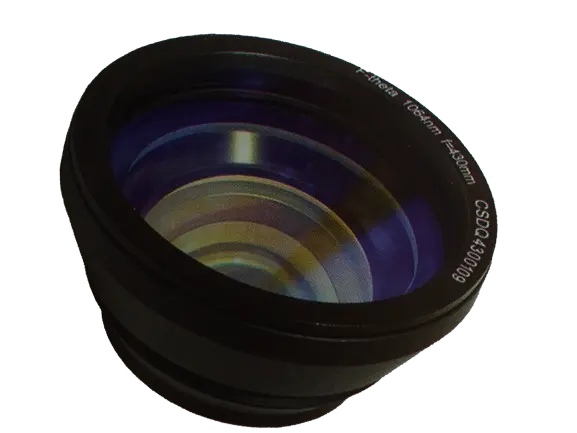
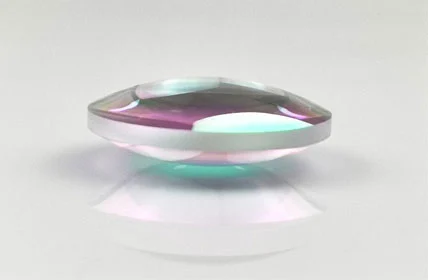
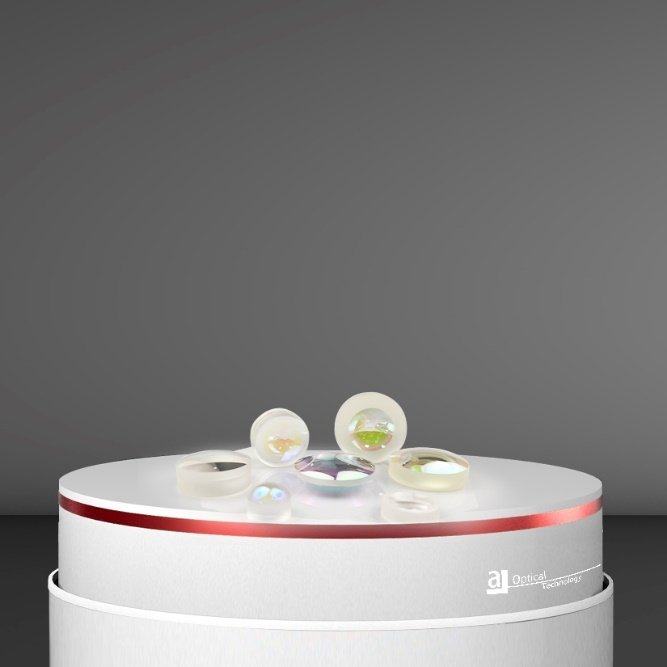
When it comes to photography, image quality is paramount. Every professional and hobbyist photographer understands the value of capturing sharp, vibrant, and high-contrast images. In this journey to achieve the ultimate photo, one crucial element often stands out: the lens. Today we focus on the double convex lens, specifically from the renowned brand AT Optical, to understand how it improves image quality in photography.
What Is a Double Convex Lens? Definition, Uses and Imaging Performance
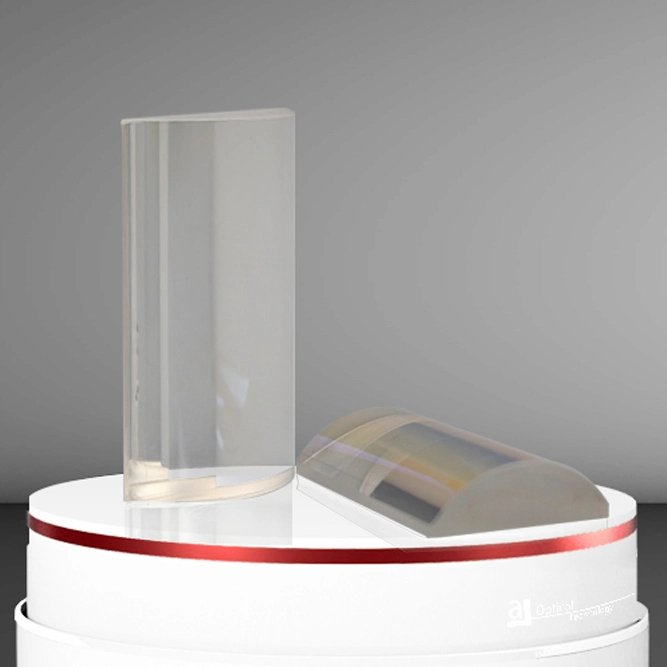
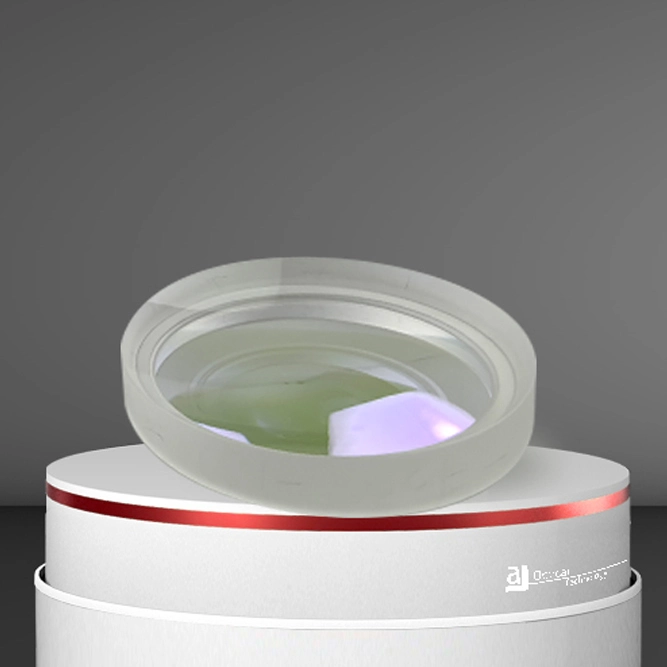
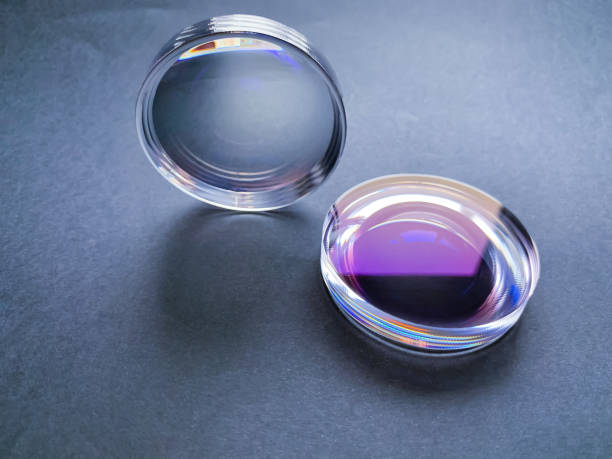
A double convex lens, also known as a bi-convex or biconvex lens, is a positive lens with two outward-curving surfaces. It converges incident light and can form a real image when the object is positioned beyond the focal point. Double convex lenses are particularly useful in finite-conjugate imaging systems where the object and image distances are relatively similar. In photography and machine vision, however, final image quality depends on the complete optical system rather than on one lens element alone.
Key Takeaways
A double convex lens has two convex refracting surfaces and a positive focal length.
It can focus parallel light, form real images and magnify nearby objects under suitable object-distance conditions.
Its symmetrical geometry is especially useful for finite imaging when the object and image distances are comparable.
Sharpness, contrast and color performance also depend on lens material, aperture, surface accuracy, centration, coating and system design.
A custom lens should be specified from the required wavelength, focal length, field, aperture, object distance and image distance.
What Is a Double Convex Lens?
Double convex lens definition: A double convex lens is an optical lens whose two principal surfaces curve outward from the center. The lens is normally thicker at the center than at the edge, giving it positive optical power in air. Parallel rays entering the lens are refracted toward a focal region on the opposite side.
The terms double convex lens, bi-convex lens and biconvex lens describe the same basic lens form. Some users also search for "two convex lens", although double convex or bi-convex is the standard technical terminology.
A lens may have equal radii on its two surfaces, producing a symmetrical geometry, or different positive radii selected to improve performance in a particular optical layout. Its real behavior depends on more than its visible shape. Refractive index, dispersion, center thickness, clear aperture, surface figure, surface quality and centration all influence the final result.
How Does a Double Convex Lens Work?
A double convex lens works through refraction. When light passes from air into the optical material, its propagation speed changes. The curved entrance surface bends the rays, and the second surface bends them again as they leave the lens.
For rays travelling close to the optical axis, a positive double convex lens redirects parallel light toward the rear focal point. Light arriving from a finite object can be brought to an image plane whose location depends on the focal length and object distance.
The Thin-Lens Equation
In a simplified thin-lens model, focal length, object distance and image distance are related by:
1/f = 1/do + 1/di
In this equation, f is the focal length, do is the object distance and di is the image distance. Optical sign conventions vary, so one convention must be applied consistently throughout a calculation.
This equation is useful for estimating image position and magnification, but it does not fully describe a manufactured lens. A real double convex lens has finite thickness, two refracting surfaces and optical aberrations. Detailed imaging performance normally requires ray tracing based on the complete lens prescription.
Why the Conjugate Ratio Matters
The conjugate ratio compares the object distance with the image distance. Double convex lenses are commonly selected for finite-conjugate imaging, especially when the object and image distances are reasonably similar.
In a symmetrical layout near 1:1 magnification, the refraction can be distributed across both convex surfaces. This symmetry helps balance several aberrations more effectively than a positive singlet designed for a strongly unequal object-to-image relationship.
When one conjugate is effectively infinite, such as focusing a collimated laser beam, a plano-convex lens or another optimized positive lens form may perform better. Lens geometry should therefore be selected from the actual optical layout instead of focal length alone.
How Does a Double Convex Lens Form an Image?
The image produced by a double convex lens changes as the object moves relative to the focal point. The following table summarizes ideal paraxial image formation for a positive lens.
| Object Position | Image Position | Image Type | Orientation | Relative Size |
|---|---|---|---|---|
| Beyond 2f | Between f and 2f | Real | Inverted | Reduced |
| At 2f | At 2f | Real | Inverted | Approximately equal |
| Between f and 2f | Beyond 2f | Real | Inverted | Magnified |
| At f | At infinity in the ideal model | No finite image plane | — | — |
| Inside f | On the object side | Virtual | Upright | Magnified |
These rules describe an ideal thin lens. The principal planes and exact focal positions of a real lens shift according to center thickness, material and surface radii. High-accuracy systems should therefore use the actual optical prescription rather than relying only on a classroom ray diagram.
How Does a Double Convex Lens Affect Image Quality?
A double convex lens can contribute to a sharp, high-contrast image when its geometry matches the conjugate conditions and when material, aperture, coating and alignment are properly controlled. It does not, however, automatically improve every photographic or imaging system.
Modern camera objectives typically contain multiple positive and negative elements. These elements work together to balance spherical aberration, chromatic aberration, coma, astigmatism, field curvature and distortion across the specified field of view. A double convex lens may provide positive optical power within that assembly, but final image quality is determined by the complete design.
1. Sharpness and Spherical Aberration
In a spherical lens, rays passing through the outer zones do not focus at exactly the same axial position as paraxial rays. This difference is known as spherical aberration. It can enlarge the image of a point source and reduce fine-detail contrast.
For finite imaging with similar object and image distances, a suitably designed double convex lens can distribute refraction across both surfaces and provide better aberration balance than a positive lens used under unsuitable conjugate conditions. Performance can be improved further by selecting appropriate surface radii, focal length, clear aperture and stop position.
Reducing the working aperture may decrease spherical aberration, but it also reduces collected light and eventually introduces diffraction limitations. The aperture should therefore be selected from the required resolution, brightness and depth of field rather than minimized without considering the complete system.
2. Contrast, Ghost Images and Flare
Every uncoated glass-air interface reflects part of the incident light. In a system containing several elements, these reflections can create ghost images, flare and reduced contrast.
A wavelength- and angle-matched AR anti-reflection coating reduces unwanted surface reflection and increases useful transmission. The coating must be designed for the actual spectral range and angle of incidence. A visible broadband coating is not automatically suitable for a narrow 1064 nm laser, a near-infrared sensor or a UV imaging system.
3. Chromatic Aberration and Color Accuracy
The refractive index of optical glass changes with wavelength. As a result, different colors do not focus at exactly the same axial location in a simple singlet lens. This produces chromatic aberration, which may appear as color fringing or reduced polychromatic sharpness.
A double convex singlet may be suitable for monochromatic, narrow-band or moderate-performance imaging. Broadband color imaging may require a material with more suitable dispersion, a reduced aperture or a multi-element achromatic design.
Engineers can compare visible, ultraviolet and infrared substrates through ATOPTIK's optical material selection resources.
4. Distortion and Off-Axis Performance
Symmetry can help balance certain aberrations under symmetrical conjugate conditions, but it does not guarantee distortion-free imaging. Distortion, coma, astigmatism and field curvature also depend on lens bending, stop position, field angle, aperture and the other components in the system.
For wide-field photography or large-format machine vision, one spherical singlet is rarely sufficient to maintain uniform performance from the center to the edge of the image. A custom multi-element design may be required when the application specifies low distortion, high modulation transfer function, a flat image plane or a large numerical aperture.
5. Manufacturing Accuracy and Alignment
Even a well-designed lens can underperform when manufacturing and assembly errors are not controlled. Important factors include surface figure, surface irregularity, scratch-dig quality, wedge, centration, center thickness and coating uniformity.
Decentration or tilt can introduce asymmetric aberrations that are not predicted by the nominal design. High-resolution imaging systems should therefore define both component tolerances and assembly alignment requirements.
Image performance may be verified through interferometric surface testing, centration measurement, dimensional inspection, transmission testing and system-level methods such as modulation transfer function or wavefront analysis.
About Double Convex Lens Uses
Double convex lenses are used wherever positive optical power is required and the conjugate relationship suits the lens geometry. Their applications extend far beyond consumer photography.
| Double Convex Lens Uses | Function of the Double Convex Lens | Important Design Considerations |
|---|---|---|
| Finite-conjugate imaging | Forms an image of an object at a finite image plane | Conjugate ratio, magnification, field, aperture and distortion |
| Image relay systems | Transfers an intermediate image between optical planes | Relay magnification, telecentricity, spacing and field coverage |
| Magnifiers | Produces an upright virtual image when the object is inside the focal length | Eye relief, field curvature, focal length and clear aperture |
| Microscopes and inspection systems | Provides positive power within an objective, relay or illumination path | Numerical aperture, working distance, resolution and chromatic correction |
| Machine vision | Supports object-to-sensor imaging in a controlled working-distance range | Sensor size, pixel pitch, MTF, distortion, depth of field and lighting |
| Projection and illumination | Collects, concentrates or relays light | Source size, étendue, thermal loading and illumination uniformity |
| Laser and photonics systems | Focuses or relays a beam under suitable conjugate conditions | Wavelength, beam diameter, wavefront quality, coating and damage threshold |
| Scientific instruments | Provides positive optical power in spectrometers, sensors and laboratory setups | Calibration stability, wavelength range, stray light and environmental conditions |
Are Double Convex Lenses Used in Photography?
Yes, a double convex element can be used within a photographic lens assembly, especially where positive power and finite imaging are required. It should not be treated as a universal replacement for a complete camera objective.
A camera lens must form a high-quality image across a sensor, not only at one axial point. Designers combine different surface shapes, optical powers, glass types, apertures and element spacings to control aberrations across focus distances and field angles.
For a custom photographic or imaging objective, ATOPTIK can evaluate whether a double convex element, plano-convex lens, meniscus lens, achromatic group or more complex assembly is appropriate through its optical lens design service.
Double Convex Lens vs Plano-Convex, Meniscus and Aspheric Lenses
Different positive lens forms are optimized for different conjugates, fields and aberration requirements. Choosing a lens only because it has the required focal length can lead to unnecessary image degradation.
| Lens Type | Geometry | Typical Strength | Common Limitation |
|---|---|---|---|
| Double convex lens | Two outward-curved surfaces | Finite imaging and image relay, especially at relatively similar conjugates | Spherical and chromatic aberration remain in a simple singlet |
| Plano-convex lens | One flat and one outward-curved surface | Focusing or collimating when one conjugate is long or effectively infinite | Orientation strongly affects spherical aberration |
| Positive meniscus lens | One convex and one concave surface with positive total power | Can improve aberration balance in selected imaging and beam applications | Performance depends strongly on bending and orientation |
| Achromatic doublet | Two elements made from materials with different dispersion | Improved chromatic correction for broadband imaging | More components, interfaces, alignment requirements and cost |
| Aspheric lens | At least one non-spherical surface | Can reduce spherical aberration and element count | Manufacturing and metrology may be more complex |
A double convex lens is often an efficient choice for moderate-field finite imaging. An achromatic or aspheric solution may be more suitable when the system requires broadband color correction, a large aperture, a short focal length or a very small focused spot.
How Materials and Coatings Influence Double Convex Lens Performance
Lens geometry defines only part of the optical behavior. Material and coating selection determine wavelength transmission, dispersion, environmental durability, thermal stability and reflection loss.
Common Optical Materials
| Material | Typical Advantages | Common Application Direction |
|---|---|---|
| N-BK7 or equivalent optical crown glass | Good visible transmission, consistent optical properties and broad availability | General visible imaging, instruments and prototypes |
| Fused silica | Good UV transmission, low thermal expansion and strong thermal stability | UV systems, lasers, scientific instruments and temperature-sensitive applications |
| Sapphire | High hardness, mechanical strength and environmental durability | Harsh environments and mechanically demanding optical systems |
| Special optical glass | Selected refractive index and dispersion characteristics | Color correction, compact designs and custom optical performance |
The correct choice depends on the full operating band rather than on one nominal wavelength. Designers should also consider homogeneity, internal transmission, thermal coefficient, chemical durability, availability, blank size and manufacturing feasibility.
AR Anti-Reflection Coating Selection
AR anti-reflection coatings reduce reflection only over their intended wavelength and angular range. Typical options include single-wavelength V-coatings, broadband visible coatings, visible-to-near-infrared coatings and application-specific UV or infrared coatings.
A coating request should include:
Operating wavelength or spectral band
Angle of incidence
Polarization state when relevant
Target average or maximum reflectance
Environmental and cleaning requirements
Laser pulse duration, repetition rate and fluence when applicable
Specifying only "AR coating" is often insufficient because a coating optimized for one wavelength range can provide poor performance outside that range.
How to Specify a Custom Double Convex Lens
A complete specification helps an optical manufacturer determine whether the requested lens can be produced consistently and whether the proposed tolerances are necessary for the system.
Optical Requirements
Effective focal length, back focal length or complete prescription
Operating wavelength or spectral range
Object distance, image distance and required magnification
Clear aperture, f-number or numerical aperture
Field of view and allowable distortion
Required MTF, spot size, wavefront error or image resolution
AR coating, reflectance and laser-damage requirements
Mechanical and Manufacturing Requirements
Outside diameter and diameter tolerance
Center thickness and edge-thickness constraints
Surface radii and radius tolerances
Surface figure and irregularity
Surface quality or scratch-dig requirement
Centration, wedge or edge-thickness variation
Bevel, protective chamfer and mounting interface
Project and Quality Requirements
Prototype and production quantities
Required inspection data and acceptance criteria
Environmental temperature, humidity, shock or vibration conditions
Cleaning, packaging and contamination-control requirements
Target schedule and expected annual demand
Not every project requires the tightest available tolerance. Applying very tight limits to dimensions that do not affect system performance can increase cost and lead time without improving the image. A tolerance analysis or manufacturability review can help identify which parameters are truly performance-critical.
Why Choose ATOPTIK?
(1) Precision Engineering
What sets ATOPTIK's double convex lenses apart is the precision engineering that goes into each product. The brand leverages cutting-edge technology to produce lenses that meet the highest standards of optical performance. This focus on quality ensures that photographers have access to tools that help them achieve their creative vision effortlessly.
(2) Durability and Reliability
In the world of photography, equipment durability is just as important as performance. ATOPTIK lenses are constructed using high-quality materials, making them robust and reliable even in demanding conditions. Whether you're an outdoor enthusiast or a studio professional, you can count on ATOPTIK lenses to deliver exceptional results consistently.
(3) Versatility
Finally, double convex lenses from ATOPTIK offer unparalleled versatility. They are compatible with various camera systems and can be used across different genres of photography—from landscapes and portraits to macros and astrophotography. This versatility makes them an invaluable addition to any photographer's toolkit.
Need a Custom Double Convex Lens?
ATOPTIK provides custom optical component support covering material selection, lens design, precision processing, coating and optical assembly. Submit your drawing or share the wavelength, focal length, diameter, object distance, image distance, coating and quantity requirements for an engineering review.
Contact ATOPTIK for a Project Review
Frequently Asked Questions About Double Convex Lenses
What is the double convex lens meaning?
A double convex lens is a positive lens with two surfaces that curve outward. It is thicker at the center than at the edge and converges incident light. It is also called a bi-convex or biconvex lens.
Is a double convex lens converging or diverging?
In air, a conventional double convex lens made from a material with a higher refractive index than its surroundings is a converging lens. Parallel paraxial rays are directed toward a focal point after passing through it.
What type of image does a double convex lens produce?
When the object is beyond the focal point, the lens can produce a real, inverted image. When the object is inside the focal length, it produces a virtual, upright and magnified image. Image size depends on the object position.
What are the main uses of a double convex lens?
Common double convex lens uses include finite-conjugate imaging, image relay, magnification, machine vision, microscopes, projection systems, illumination optics, scientific instruments and selected laser or photonics applications.
What is the difference between a double convex lens and a plano-convex lens?
A double convex lens has two outward-curving surfaces and is commonly used when the object and image distances are relatively similar. A plano-convex lens has one flat surface and is frequently selected when one conjugate is much longer than the other, such as focusing a collimated beam.
Does a double convex lens always improve image quality in photography?
No. It can provide useful positive optical power and balanced finite imaging, but photographic image quality depends on the complete multi-element lens system. Material dispersion, aperture, coating, spacing, alignment and correction of off-axis aberrations are also important.
Which material is best for a double convex lens?
There is no universal best material. Optical crown glass is widely used for visible systems, fused silica is often selected for UV transmission and thermal stability, and sapphire may be appropriate when mechanical durability is important. The final choice should match wavelength, environment, performance and cost requirements.
Conclusion
A double convex lens is a positive optical element with two outward-curved surfaces. It is especially valuable in finite-conjugate imaging and image-relay systems where the object and image distances are relatively similar. Its effect on image quality depends on more than its basic shape. Surface radii, material dispersion, aperture, coating, manufacturing tolerances and alignment all influence sharpness, contrast, color performance and off-axis behavior. In demanding photographic, machine-vision or scientific systems, the double convex lens should be evaluated as one element within the complete optical design.
By defining the actual wavelength, focal length, conjugates, aperture, field and image-quality requirements, engineers can determine whether a double convex lens is the best solution or whether a plano-convex, meniscus, achromatic or aspheric design would provide better performance.