English
 中文
中文 日本語
日本語 한국어
한국어 français
 Deutsch
 Español
 italiano
 русский
 português
 العربية
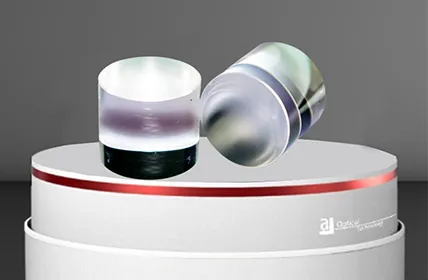
Rod lenses provide controlled light transmission over a defined length, making them ideal for imaging relay systems, endoscopy, and fibre optic coupling where alignment and directional control are critical. Ball lenses, with their spherical geometry, are better suited for compact optical coupling and beam focusing applications where simplicity and wide-angle light collection are required.
The optimal choice depends on how precisely you need to guide light, the system geometry, and coupling efficiency requirements.
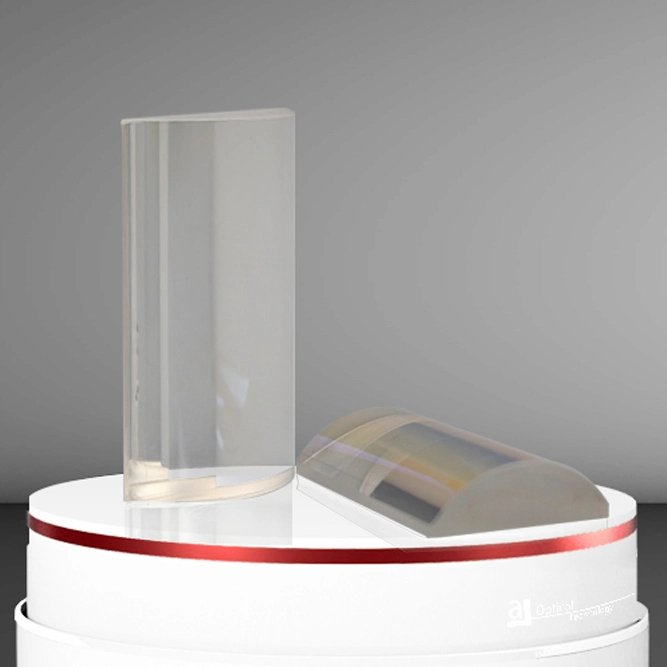
A rod lens is a cylindrical optical component with flat or polished end faces and a defined length-to-diameter ratio. It is designed to transmit and shape light along its axis with minimal divergence.
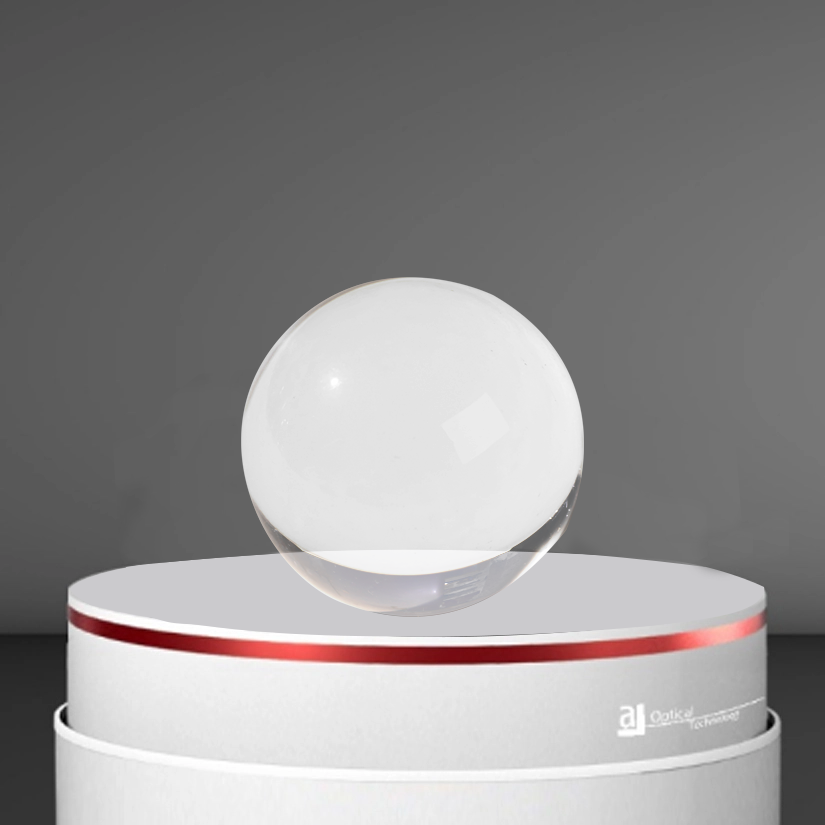
A ball lens, on the other hand, is a fully spherical optical component that refracts light symmetrically in all directions.
Rod lens: Cylindrical shape, parallel sides, flat or curved ends
Ball lens: Fully spherical, uniform curvature
This structural distinction determines how each lens handles light propagation, focusing, and coupling.
A rod lens guides light along its axis with controlled refraction. It can:
Collimate or relay an image over a distance
Maintain beam direction with reduced divergence
Provide better control in linear optical systems
This makes rod lenses essential in applications where optical path stability is required.
Ball lenses focus and collimate light symmetrically. Their advantages include:
High numerical aperture (NA)
Efficient light collection from wide angles
Simple alignment in compact systems
However, they introduce more aberrations compared to rod lenses in long-distance transmission setups.
| Parameter | Rod Lens | Ball Lens |
|---|---|---|
| Shape | Cylindrical | Spherical |
| Light control | Directional, axial | Omnidirectional |
| Image relay | Excellent | Limited |
| Coupling efficiency | High (aligned systems) | High (broad capture) |
| Aberration control | Better for linear systems | Higher spherical aberration |
| System integration | Requires precise alignment | Easier to integrate |
A rod lens is the preferred choice when your system requires precision, stability, and controlled light propagation.
Endoscopic imaging systems
Optical relay systems
Fibre optic coupling with defined beam paths
Laser delivery systems
Industrial inspection equipment
Maintains image quality over distance
Reduces optical loss in linear transmission
Enables compact relay designs without multiple lens groups
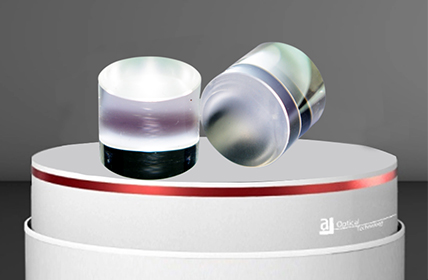
Ball lenses are ideal for compact, cost-effective optical coupling solutions.
Fibre-to-fibre coupling
Laser diode collimation
Optical sensors
Barcode scanners
Compact optical modules
Simplified optical design
Lower cost compared to complex assemblies
High efficiency for short-distance light coupling
The answer depends on your coupling scenario:
Rod lens:
Better for precise alignment systems
Suitable for longer optical paths
Reduces insertion loss when properly aligned
Ball lens:
Better for quick alignment and compact setups
Effective in short-distance coupling
Easier to integrate into small devices
In high-performance telecom or medical systems, rod lenses are often selected for their stability and repeatability.
Yes, particularly in applications involving image relay or extended optical paths. Rod lenses maintain image fidelity by controlling light propagation along a defined axis. Ball lenses, due to their geometry, are not optimised for image transmission and are more suitable for point-to-point light coupling.
Precision grinding and polishing along cylindrical surfaces
Tight control of length, diameter, and refractive index
Optional coatings for transmission optimisation
Spherical polishing or moulding processes
High uniformity in diameter and surface finish
Cost-effective for large-scale production
For OEM projects, selecting a reliable supplier for custom rod lens solutions is critical, especially when tight tolerances and coating performance are required.
When designing an optical system, consider:
Image relay → Rod lens
Light coupling → Ball lens
Linear, elongated systems → Rod lens
Compact, space-limited systems → Ball lens
High precision alignment → Rod lens
Flexible alignment → Ball lens
High performance → Rod lens
Cost-sensitive → Ball lens
In most cases, no. While a ball lens can handle basic light coupling, it cannot replicate the controlled image transmission and directional stability provided by a rod lens. Substituting one for the other often leads to performance degradation, particularly in imaging or relay systems.
Rod lenses and ball lenses serve fundamentally different roles in optical systems. A rod lens excels in applications requiring controlled light transmission, image relay, and high precision, while ball lenses provide efficient, compact solutions for light coupling and focusing.
For engineers and OEM buyers, the decision should be guided by system requirements rather than cost alone. In precision optics, selecting the right component at the design stage can significantly improve performance, reduce complexity, and enhance long-term reliability.
Rod lenses are used in optical relay systems, endoscopy, fibre optic coupling, and laser transmission, where controlled light propagation is essential.
Ball lenses offer compact size, ease of alignment, and efficient light collection, making them ideal for coupling and focusing applications.
Ball lenses generally perform well in wide-angle coupling, while rod lenses provide higher efficiency in precisely aligned systems.
Yes, due to more complex manufacturing processes and tighter tolerances.
Consider parameters such as diameter, length, refractive index, coating, and alignment requirements. Working with an experienced optical manufacturer ensures optimal performance.
This is the first one.